


 CONNECT MIOT

Past events at MIOT
WORLD TRAUMA DAY 2026
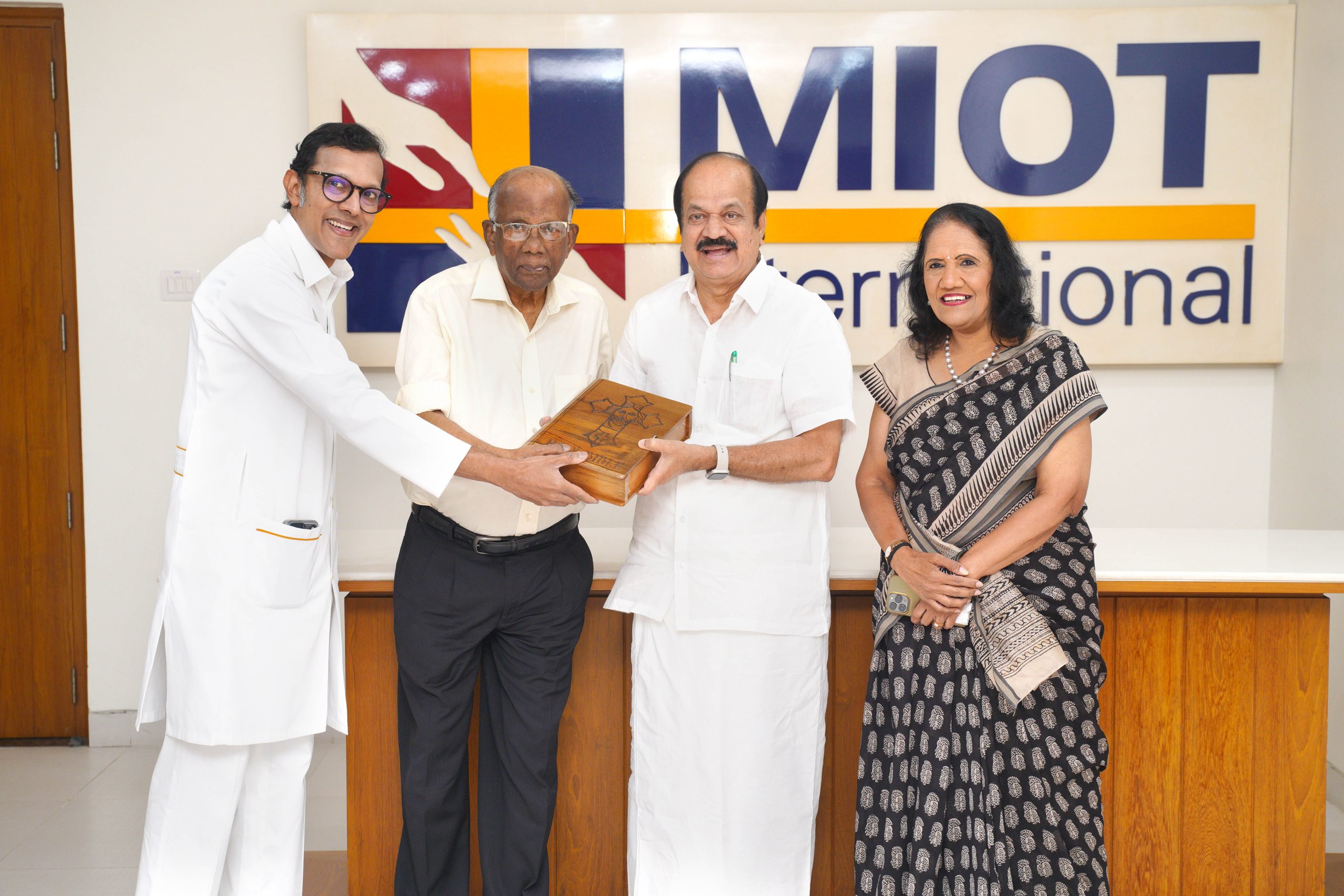
Dr. Prithvi Mohandas, Managing Director, MIOT International
Prof. Dr. P. V. A. Mohandas, Founder and Mentor, MIOT International
Hon’ble Thiru J. C. D. Prabhakar, Speaker of the Tamil Nadu Legislative Assembly (Chief Guest)
Mrs. Mallika Mohandas, Chairman, MIOT International
MIOT International Marks World Trauma Day 2026: Why First Aid Must Be Followed by Specialised Polytrauma Treatment
With the theme “FIRST AID SHOULDN’T BE THE LAST AID,” MIOT International highlights how 6,000+ trauma surgeries every year, 50+ senior trauma care specialists and advanced trauma infrastructure support patients beyond the initial emergency, from life-saving interventions to complex surgery and rehabilitation.
A severe accident can change a life in seconds. Multiple fractures, damaged organs and life-threatening complications can turn one emergency into several unfolding crises. First aid and initial stabilisation can be crucial. But for patients with complex injuries, survival may depend on what happens next, how quickly the injuries are assessed, how specialists coordinate their decisions, when surgery is performed and how complications are managed.
At MIOT International, this understanding is rooted in the hospital’s origins.
Founded on 12 February 1999 by Prof. Dr. P. V. A. Mohandas as a 70-bed hospital focused on orthopaedics and trauma, MIOT grew in response to the needs of severely injured patients. Many required more than fracture repair. Brain injuries, chest and abdominal trauma, organ dysfunction and other complications demanded the involvement of multiple specialties. The need to bring these disciplines together helped shape MIOT’s evolution into a multispecialty hospital.
Today, MIOT International’s Level 1 Polytrauma Centre brings together trauma expertise, advanced diagnostics, surgical technology, infection management, critical care and rehabilitation. With 6,000+ trauma surgeries every year, 50+ senior trauma care specialists, over 4 decades of expertise, the centre is equipped to address the multiple challenges that can arise in severe trauma.
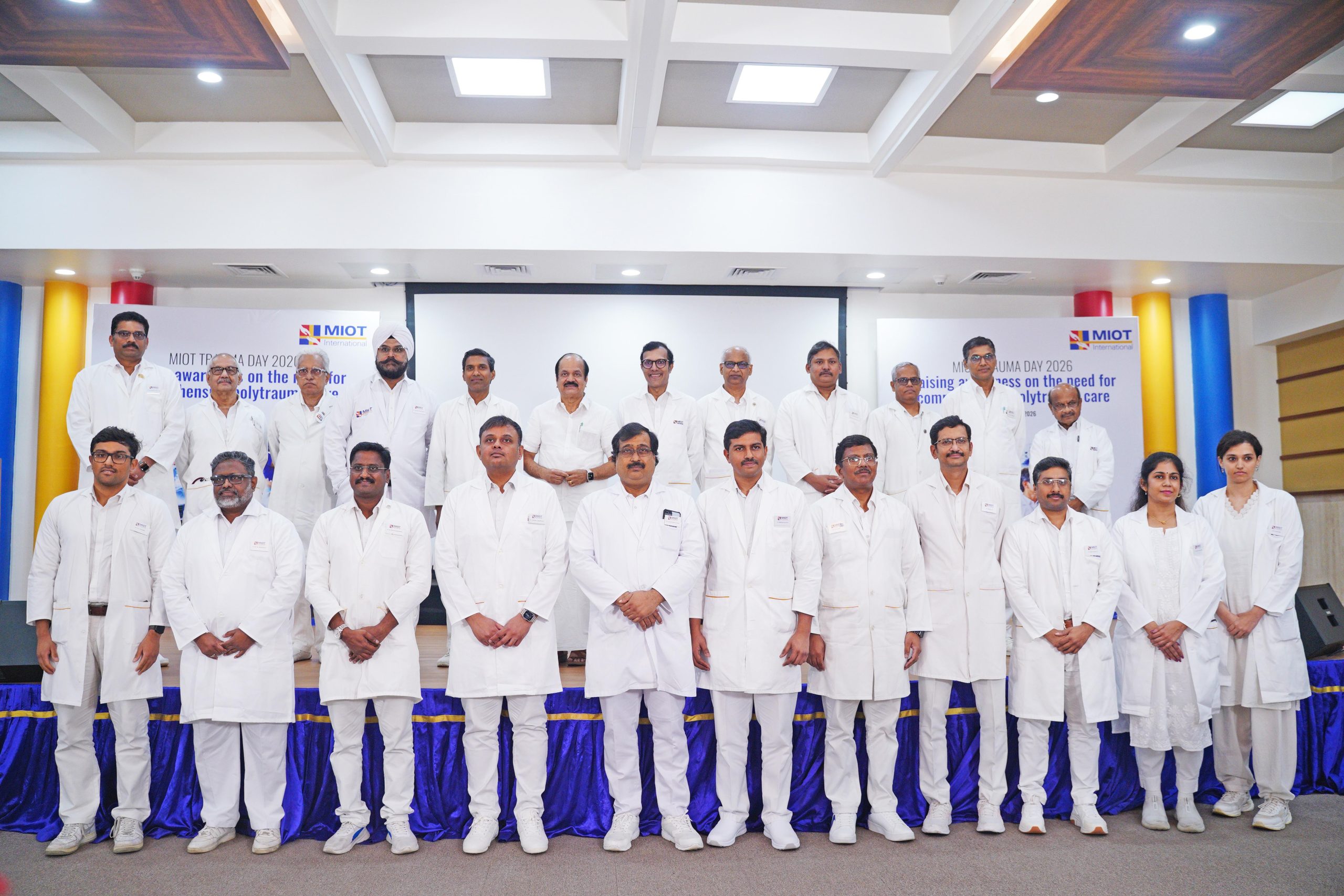
Marking World Trauma Day 2026, MIOT International is highlighting the theme “FIRST AID SHOULDN’T BE THE LAST AID.” The programme was attended by Hon’ble Thiru J. C. D. Prabhakar, Speaker of the Tamil Nadu Legislative Assembly, as Chief Guest. Clinical presentations and patient experiences illustrated the difficult journey from the immediate aftermath of an accident to the gradual recovery of mobility, independence and everyday life.
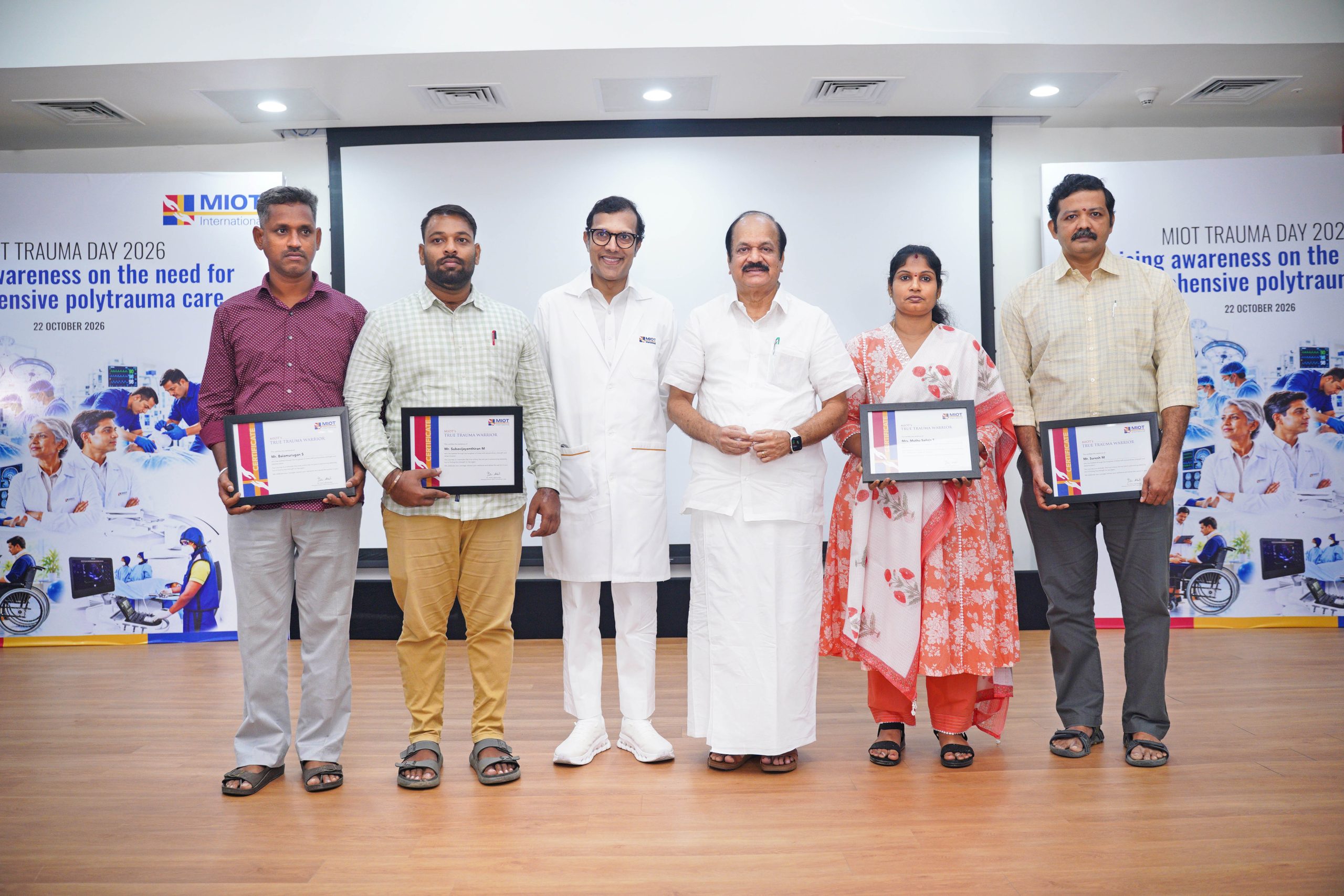
Mr. Balamurugan S (Patient)
Mr. Subavijayenthiran M (Patient)
Dr. Prithvi Mohandas, Managing Director, MIOT International
Hon’ble Thiru J. C. D. Prabhakar, Speaker of the Tamil Nadu Legislative Assembly (Chief Guest)
Mrs. Muthu Sailaja T (Patient)
Mr. Suresh M (Patient)
“First aid shouldn’t be the last aid. In serious trauma, stabilising a patient is only the beginning. What follows requires a dedicated trauma team, timely surgery, specialist expertise and comprehensive critical care. The right treatment at the right time can make a crucial difference to a patient’s recovery.”
– Dr. Prithvi Mohandas
Managing Director, MIOT International
WHEN SURVIVAL IS ONLY THE BEGINNING
Surviving a severe accident is only the first milestone. Coming off a ventilator, overcoming infection, undergoing complex surgery and eventually returning to work and family life are the milestones that follow. As one patient reflected, “Surviving the accident was only the beginning. Being able to walk, work and spend everyday moments with my family again.”
WHEN ONE ACCIDENT BECOMES MANY MEDICAL EMERGENCIES
In polytrauma, multiple injuries can threaten different organs simultaneously, making treatment a race to identify and address the most immediate threats. Patients may require emergency intervention, damage-control surgery, organ support and staged procedures as their condition stabilises. This demands close coordination between specialists, critical care teams and surgeons.
While first aid and stabilisation at the nearest hospital are vital, patients whose injuries exceed the available resources may need timely transfer to a specialised polytrauma centre. The goal is to move beyond the initial emergency to manage complications, deliver definitive treatment and support the patient’s recovery.
A SPECIALIST TEAM BUILT AROUND THE PATIENT
MIOT’s multidisciplinary trauma approach brings together the expertise required to manage injuries across multiple body systems.
- Trauma and Orthopaedic Surgery: Manages complex fractures, including open fractures, long-bone injuries, pelvic fractures and hip-socket injuries, with stabilisation and definitive fixation planned according to the patient’s condition.
- Neurosurgery: Evaluates and treats brain injuries, skull fractures and complications involving the structures surrounding the brain.
- Spine Surgery: Assesses spinal fractures and stability to determine the treatment needed to protect the spinal column and support safe recovery.
- Anaesthesia and Critical Care: Provides trauma-specific anaesthesia for emergency and complex surgeries, stabilises critically injured patients, supports vital organ function and delivers round-the-clock critical care throughout treatment and recovery.
- Interventional Radiology: Provides image-guided interventions for selected vascular and other complications when clinically indicated.
- Surgical Gastroenterology: Specialises in trauma-related injuries to abdominal organs and internal structures, including emergency and complex abdominal surgery.
- Paediatric Surgery: Specialises in the surgical management of trauma in children, addressing injuries with age-specific expertise.
- Plastic and Reconstructive Surgery: Helps manage extensive soft-tissue injuries, open wounds, skin loss and reconstruction.
- Maxillofacial Surgery: Treats complex facial fractures and injuries involving the jaws and facial structures.
- Rehabilitation and Physiotherapy: Helps patients regain movement, strength and functional independence after critical illness and complex surgery.
The combination, backed by 63 specialists, depends on the injuries involved. What matters is the ability to coordinate the necessary expertise around the patient’s changing condition, from emergency assessment and surgery to critical care and rehabilitation.
THE INFRASTRUCTURE BEHIND THE RESPONSE
Specialist expertise must be supported by the facilities and technology needed to assess injuries, perform complex procedures and manage critically ill patients.
MIOT International’s Level 1 Polytrauma Centre brings together the following capabilities:
- 6,000+ trauma surgeries every year: Reflecting the centre’s experience in managing a substantial volume of trauma cases.
- 50+ senior trauma care specialists: Bringing multidisciplinary expertise to complex injury management, supporting coordinated treatment across the different clinical needs of trauma patients.
- Dedicated Trauma Operating Theatres: Equipped for immediate emergency and complex surgical intervention, supported by round-the-clock anaesthesia teams and dedicated trauma nurses.
- 24/7 Dedicated Trauma ICU: Provides continuous critical care, close monitoring and organ support for severely injured patients.
- Complex revision surgery expertise: For cases requiring further surgical intervention after initial treatment or when the original injury and its complications demand additional procedures.
- Advanced critical care and infection management: Supporting patients with organ dysfunction, serious infections and other complications.
- Two Digital Biplane Cath Labs with 24/7 Endovascular and Interventional Radiology Support: Equipped with advanced imaging technology, including 5.2-second Cone Beam CT imaging for high-precision 3D visualisation of organs and blood vessels, enabling specialists to perform complex image-guided vascular and endovascular interventions with greater accuracy, safety and efficiency in trauma care, round the clock.
- 750 HD CT: Enables detailed imaging for rapid assessment of traumatic injuries and treatment planning.
- Mobile CT: Enables bedside imaging of critically injured patients, reducing the need to transport them for scans when clinically appropriate.
- 3T MRI: Provides advanced imaging for detailed assessment of brain, spine and soft-tissue injuries when indicated during advance trauma care.
Together, these resources support the treatment journey beyond the initial emergency. The objective is to assess the full extent of injuries, coordinate treatment across specialties, manage complications and continue care as patients progress towards recovery.
THE THREE PATIENT JOURNEYS.
The realities of polytrauma are best understood through the patients who experience it. At MIOT International, three patients faced very different emergencies: one with multiple organ injuries requiring prolonged life support, another with extensive fractures complicated by a blood clot in the lungs and severe infection, and a third who arrived in shock with fractures across several parts of his body.
Their recoveries involved much more than a single operation. Each required a carefully coordinated sequence of treatment, critical care, further procedures and rehabilitation.
SUBHAVIJAYENTHIRAN: FROM A LIFE HANGING IN THE BALANCE TO THE BEAT OF THE INSTRUMENTS
For Subhavijayenthiran, a road accident changed everything in an instant. A violin player with a life beyond the hospital, he faced a fight for survival after sustaining multiple life-threatening injuries, including bleeding and bruising in several areas of the brain, fractures of the forehead and face, a Grade II splenic laceration, a spinal fracture, and an open fracture of the left thigh bone. Following treatment at two hospitals in Puducherry, he arrived at MIOT International the next day in critical condition.
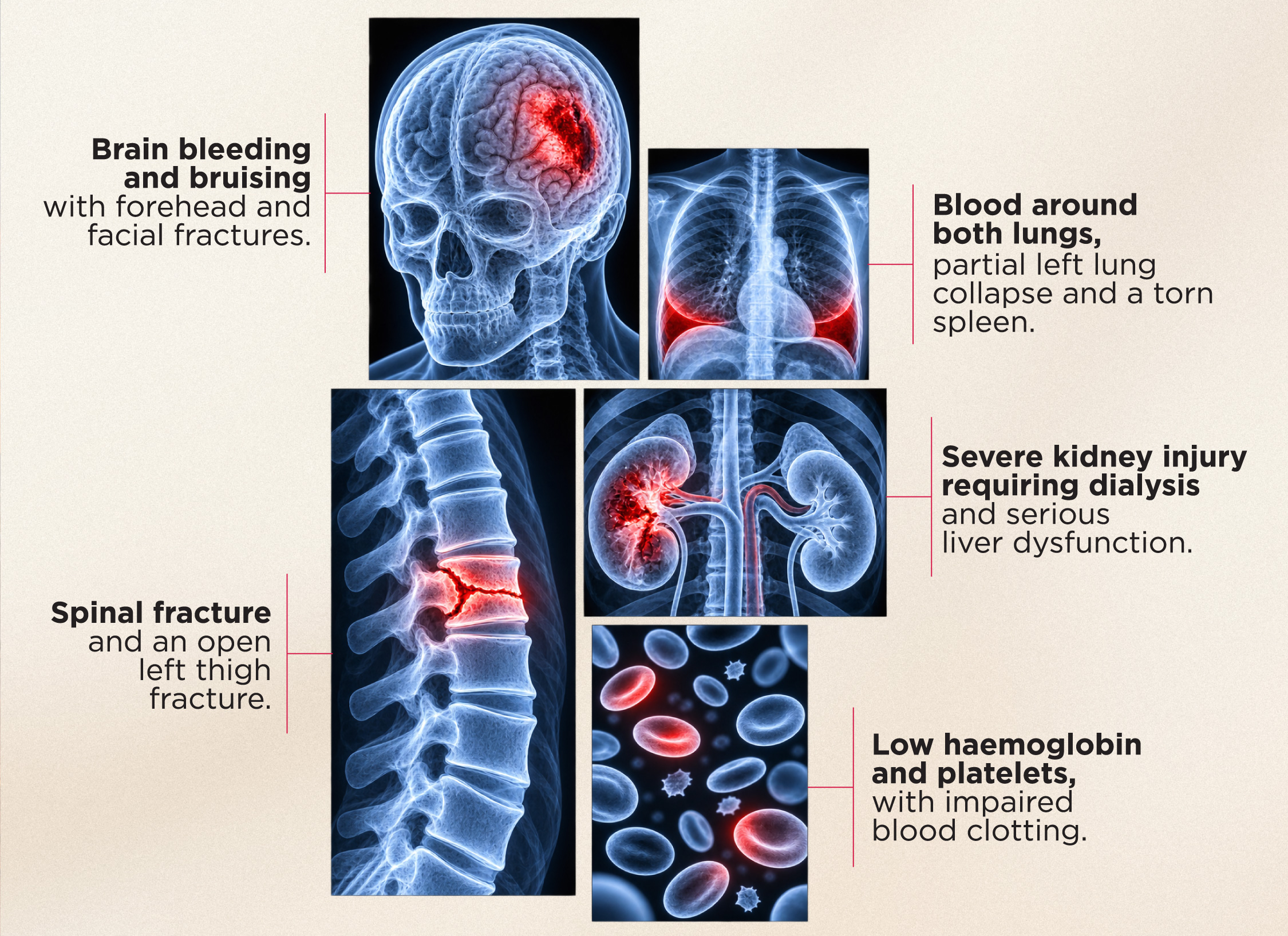
His condition required ventilator support, intensive care and dialysis for severe kidney injury. A tracheostomy helped support his breathing, while bronchoscopy helped clear secretions from his airways. Serious infections were treated with antibiotics selected based on culture results, and his vital organ functions were closely monitored.
Gradually, his consciousness improved. He was weaned off the ventilator, and his tracheostomy tube was eventually removed. Two months after the accident, MIOT’s neurosurgical team repaired a leak of fluid surrounding the brain into the nose through an endoscopic procedure using tissue from his right thigh. Five months after the accident, once he was medically stable, his fractured left thigh bone was fixed with a metal rod.
Rehabilitation helped him regain movement and strength, progressing from supported movement to walking with crutches and eventually independently. Five months after his fracture surgery, he was walking comfortably without support.
Then came a moment that captured what recovery truly meant: Subhavijayenthiran returned to playing the violin.
His journey was not simply about surviving the crash. It was about finding his way back to the life and music that made him who he was.
DEEPAK: WHEN THE FRACTURES WERE ONLY PART OF THE DANGER
A collision with a lorry left Deepak with multiple fractures involving both thigh bones, right hip, an open injury involving his right knee joint along with a severe internal tissue injury (degloving) of the right thigh. After initial stabilisation at another hospital, he was transferred to MIOT International. However, his condition was complicated by a blood clot in his lungs, a severe bloodstream infection and breathing difficulties.
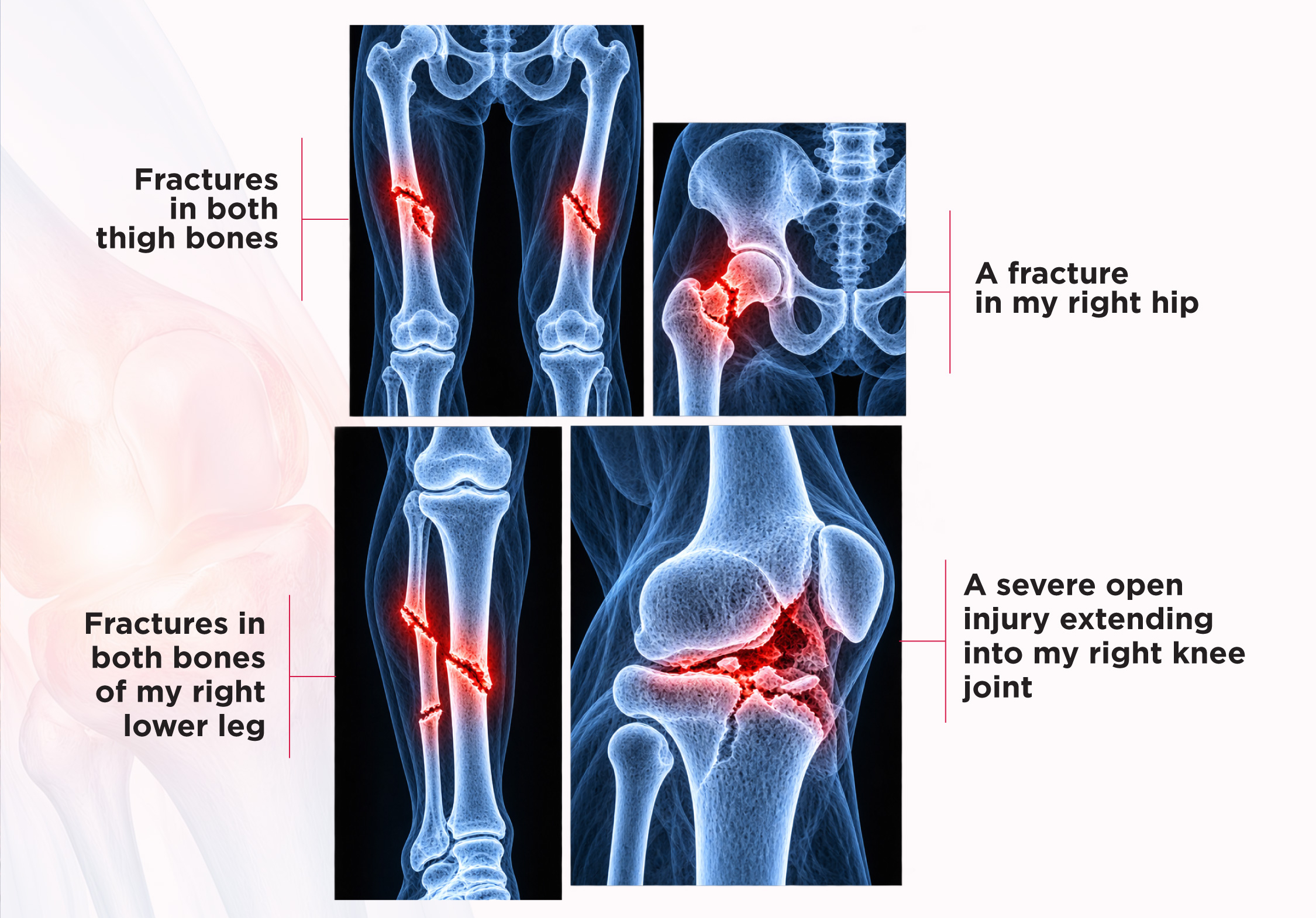
Before definitive fracture surgery could proceed, his breathing, infection and overall medical condition required urgent attention. MIOT’s team performed emergency surgery to revise his external fixator and treat his wounds, removing damaged tissue and improving access for wound management. He required ventilator support, and antibiotics were selected to target the infection. An inferior vena cava (IVC) filter was planned to help prevent further blood clots from travelling to the lungs.
Deepak remained in intensive care for around five days. As his breathing improved and his condition stabilised, he became fit enough for definitive fracture surgery.
His right thigh bone was fixed with a metal rod inserted through the knee, and screws were used to stabilise the right hip fracture. His right lower-leg wounds were cleaned and covered with a skin graft, while his left thigh bone was fixed with a metal rod.
The road to recovery continued through intensive physiotherapy. Deepak progressed from standing with support to walking independently within four months. His fractures showed good healing by 12 weeks, and he eventually returned to work and everyday activities.
His recovery required more than fracture repair. It called for emergency wound management, intensive care, complex surgery and sustained rehabilitation, helping him regain his independence.
BALAMURUGAN: FROM ARRIVING IN SHOCK TO RETURNING TO WORK
On 5 August 2023, 36-year-old Balamurugan was struck by a two-wheeler while walking, with his wife witnessing the accident. After initial treatment at Chengalpattu Government Hospital, he reached MIOT International around six and a half hours later in hypovolaemic shock, a life-threatening condition caused by severe blood or fluid loss. He also had an open wound on his right lower leg, with the shin bone exposed.
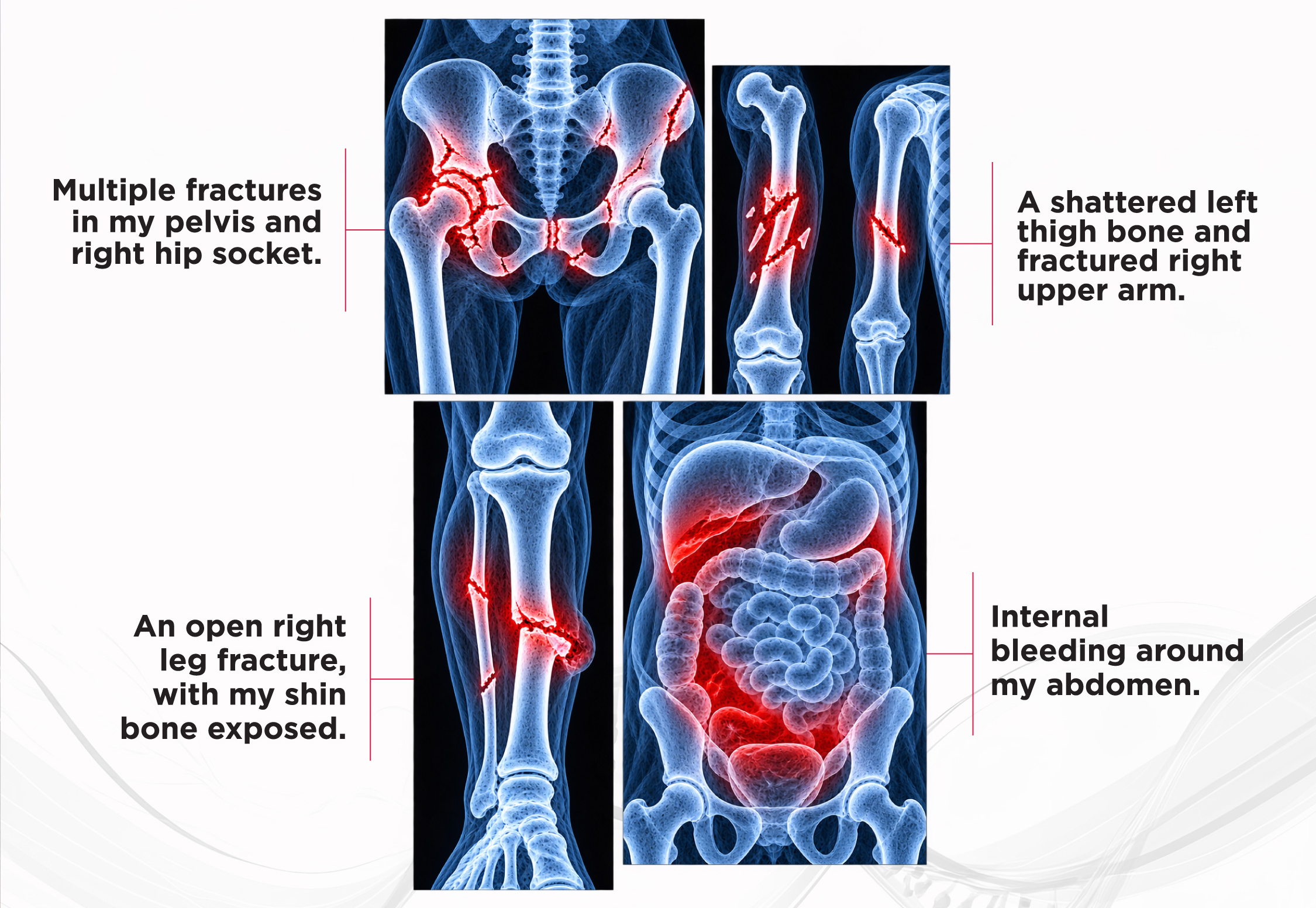
Balamurugan was stabilised with intravenous fluids and a blood transfusion. Further assessment revealed multiple fractures involving his legs, pelvis, hip socket and right upper arm, alongside internal bleeding around the right adrenal gland.
His treatment required a carefully staged surgical plan. On 7 August, surgeons cleaned the open wound on his right lower leg and stabilised the shin bone with a metal nail. His right upper-arm fracture was repaired using a plate and screws, and his left thigh bone was stabilised with a long metal nail.
On 10 August, the team repaired his fractured right hip socket with a metal plate and stabilised the joint connecting the pelvis to the base of the spine. On 12 August, an IVC filter was placed to help prevent blood clots from travelling to the lungs. A CT scan of the lung blood vessels showed no pulmonary embolism at that time.
His recovery extended well beyond the initial operations. Physiotherapy helped him rebuild movement and strength, and he was discharged in a stable condition after around two weeks in hospital, with a rehabilitation and follow-up plan.
Four months after the accident, he underwent bone grafting around his right shin to support fracture healing. The IVC filter was later removed after he regained the ability to walk, and around 18 months after the accident, the metal implant in his right shin was removed.
From arriving in shock to undergoing staged surgeries, further bone healing procedures and months of rehabilitation, Balamurugan’s recovery was a long journey towards independence. He eventually returned to work and resumed his everyday activities.
FIRST AID IS THE FIRST STEP. THE NEXT STEPS MATTER, TOO.
The three journeys highlight a central principle of serious trauma management: getting through the immediate emergency is only the beginning. Recovery may require specialist surgery, organ support, infection management, repeated procedures and sustained rehabilitation.
MIOT International’s message on World Trauma Day 2026 is that patients with complex, multiple injuries may need more than initial stabilisation. They need timely assessment, coordinated specialist intervention and the infrastructure to manage complications as their condition evolves.
From a hospital founded on orthopaedics and trauma to a multispecialty centre equipped to manage complex injuries, MIOT’s focus remains on the full journey beyond the accident.
FIRST AID SHOULDN’T BE THE LAST AID.
Because surviving the accident is only the beginning. Getting back to everyday life, gaining independence with the right polytrauma treatment, is what matters.