



 CONNECT MIOT


MIOT Institute of Cancer Cure
Surgical Oncology
Overview
Surgery is the most important component in the treatment of solid-organ cancers. Without it, cure is not a realistic possibility. At the MIOT Institute of Cancer Cure, our surgeons work to preserve as much of the patients’ organs as possible in order to give them a better quality of life.
New-age treatments for conservation
In the effort to preserve the patient’s organ(s) while eliminating the disease, the onco-surgeon works closely with the medical and radiation oncologists to ensure the optimal outcome in each case.
This is accomplished by adopting a conservative approach, using various pre-operative treatments such as interventional radiology, radiofrequency ablation, chemotherapy and radiation. These treatments shrink the tumours and minimise the surgical field, allowing for keyhole surgery which is minimally invasive. This not only enables the surgeons to save the organ, but also reduces scarring.
In the early stages of several cancers, surgery alone may suffice to cure the patient of the disease. In more advanced stages, chemotherapy and/or radiation may be needed before or after surgery to achieve an optimal result.
The surgical team at MICC includes plastic surgeons and surgeons from other specialities, who help reconstruct organs and limbs.
Other surgical services
Surgical oncology at MIOT also includes diagnostic procedures such as biopsies and endoscopies, placement of chemo-ports or implantable devices for the administration of chemotherapy, and treatment of complications that require surgical intervention.
Palliation of symptoms, such as breathing difficulty due to throat tumours, obstruction of the intestine or stomach, etc., are also dealt with by the surgical oncologist.
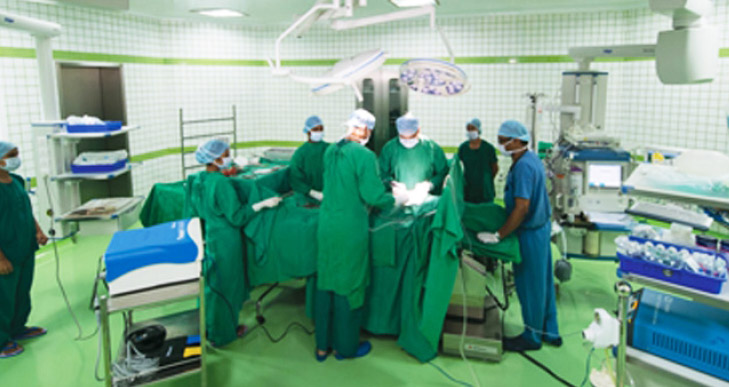
All surgeries are performed in dedicated, cutting-edge theatres and our patients recover in specially demarcated ICUs.
Treatments & Procedures
At the MIOT Centre for Cancer Cure, the following are treated through surgical oncology:
- Head and neck tumours: mouth, throat, voice box, salivary gland and thyroid cancers
- Chest cancers: oesophageal [food pipe] and lung cancers
- Gastrointestinal cancers: stomach, large and small bowel, liver, gallbladder and pancreatic cancers
- Genitourinary tumours: kidney, adrenal and bladder cancers
- Gynaecological cancers: affecting the ovaries, uterus, cervix and external genitalia
- Sarcomas (tumours of the muscles, nerves and bones) and skin cancers