Total Hip Replacement | MIOT International
Leave an enquiry

Walk Pain-Free Again with Advanced Hip Replacement Surgery

Consult MIOT Orthopaedic specialists and regain mobility with advanced hip replacement treatment.

Enquire Now

What is Hip Replacement Surgery?

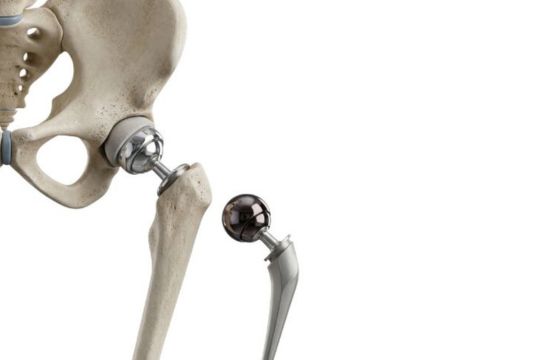
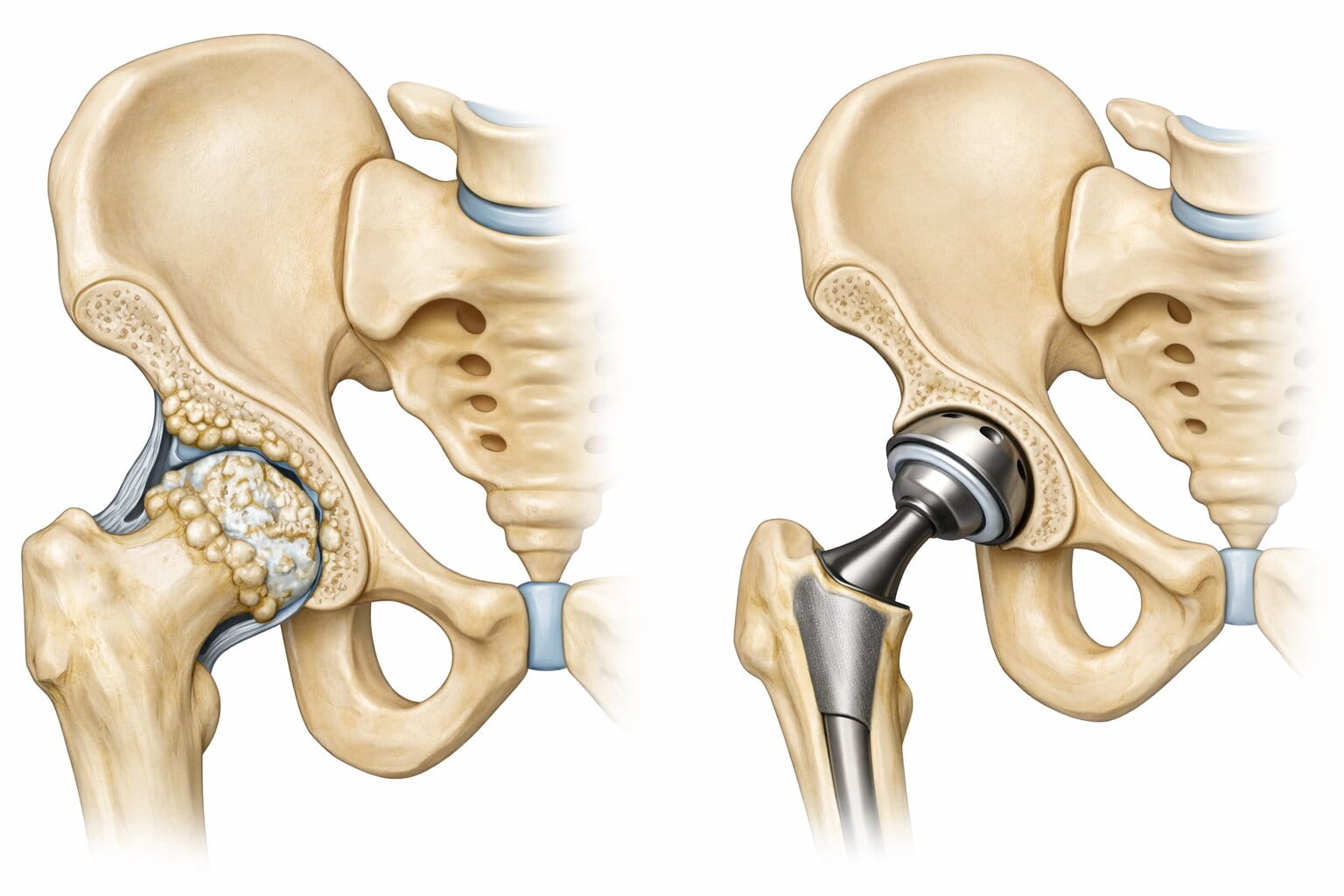
Hip replacement surgery is a procedure in which a damaged hip joint is replaced with an artificial implant to relieve pain and restore movement. It is commonly recommended for patients suffering from severe arthritis, injury, or joint degeneration.

Hip replacement is one of the most successful orthopaedic procedures, with around 95% of patients experiencing significant pain relief and improved mobility after surgery.

Expert orthopaedic surgeons, advanced technology and personalised care help restore mobility and improve quality of life.

Hip Replacement Surgery

Why Choose MIOT International

40+ years of orthopaedic expertise
40,000+ joint replacement procedures
Advanced Technology
Experienced Doctors & Surgeons

Signs You May Need Hip Replacement

  • Persistent hip pain while walking or sitting
  • Difficulty climbing stairs
  • Stiffness in the hip joint
  • Limited range of motion
  • Pain that does not improve with medication or physiotherapy
  • Difficulty performing daily activities
Hip Replacement Surgery
Revision Hip Surgery

Looking for Revision Hip Surgery?

Hip Revision Surgery is a procedure performed to repair or replace an existing artificial hip joint that has failed, worn out, become loose, or caused complications after a previous hip replacement surgery. During this procedure, the orthopaedic surgeon removes part or all of the original hip implant and replaces it with a new prosthetic component to restore stability,improve function, and relieve pain.

Patients may need hip revision surgery if they experience persistent hip or groin pain, difficulty walking or standing, swelling or stiffness around the joint, a feeling that the hip joint is unstable, reduced range of motion, or pain that returns years after the initial hip replacement surgery.

Types of Hip Replacement Procedures

Hip replacement surgery can be performed using different techniques depending on the extent of joint damage, the patient’s condition, and the number of joints that need treatment.

Total Hip Replacement (THR)

Replacement of both the ball (femoral head) and socket (acetabulum) of the hip joint.

Partial Hip Replacement

Replacement of only the femoral head while the natural socket is preserved.

Revision Hip Replacement

A procedure performed to replace or repair a previously implanted hip joint that has worn out or failed.

Minimally Invasive Hip Replacement

Performed using smaller incisions to reduce tissue damage and promote faster recovery.

Unilateral Hip Replacement

Surgery performed on one hip joint.

Bilateral Hip Replacement

Surgery performed on both hip joints, either during the same procedure or as staged surgeries.

Our Treatment Approach

Consultation & Diagnosis
Personalised Surgical Planning
Advanced Surgery by experienced surgeons
Rehabilitation & physiotherapy for faster recovery
MIOT Bhutan Services

Services Offered at MIOT Hospitals Information Centre – Bhutan

The MIOT Hospitals Information Centre in Bhutan assists patients who are planning to travel to MIOT International, India for advanced treatment. Our dedicated team provides complete support to ensure a smooth and comfortable treatment journey.

Telemedicine
Visa & Travel Assistance
Treatment Cost & Admission Process
Accommodation & Facilities
Hospital Stay
Discharge Procedure
Travel Back to Your Country

Patient Testimonials Across The Globe

Specialties

Orthopedics

  • Joint Replacement and Revision Surgery (Hip, Knee, Shoulder)
  • Upper Limb
  • Hip Replacement Surgery
  • Sports Medicine
  • Trauma Care

Cardiology

  • Thoracic and Cardiovascular Care
  • Interventional Cardiology
  • MIOT Heart Revive (Cardiac Emergency)
  • Children’s Cardiac Care

Gastroenterology

  • Medical Gastroenterology
  • Surgical Gastroenterology
  • Hepato-Pancreato-Biliary Surgery
  • Bariatric Surgery

Nephrology

  • Kidney Transplant
  • Dialysis
  • Interventional Procedures

Oncology

  • Surgical Oncology
  • Medical Oncology
  • Radiation Oncology
  • Haematology, Haemato-Oncology & Bone Marrow Transplant

Neurology and Neurosciences

  • Deep Brain Stimulation
  • Stroke
  • Brain Tumors
  • Brain Bypass Surgery
  • Brain Aneurysms
  • Epilepsy Surgery
  • Pediatric Neurosurgery

Organ Transplant

  • Liver
  • Kidney
  • Heart
  • Lung
  • Bone marrow transplant

Frequently Asked Questions

What is hip replacement surgery?
Hip replacement surgery is a procedure in which a damaged or worn-out hip joint is replaced with an artificial implant. The surgery helps relieve pain, improve joint movement and restore mobility.
Who needs hip replacement surgery?
Hip replacement is usually recommended for patients who have severe hip pain due to conditions such as arthritis, injury, or joint degeneration, especially when medications and physiotherapy no longer provide relief.
How long does hip replacement surgery take?
The surgery typically takes 1–2 hours depending on the patient’s condition and the type of procedure performed.
How long will the artificial hip joint last?
Modern hip implants can last 15–20 years or longer depending on factors such as activity level, implant type and overall health.
When can I walk after hip replacement surgery?
Many patients are able to stand or walk with assistance within a day after surgery followed by gradual improvement through physiotherapy and rehabilitation.
How long is the recovery period?
Recovery varies for each patient but most people resume normal daily activities within 4–8 weeks with continued improvement over several months.
Is hip replacement surgery painful?
Patients may experience some discomfort after surgery but pain is managed with medication and improves significantly as the joint heals and mobility returns.
What are the risks of hip replacement surgery?
Like any surgical procedure hip replacement carries some risks such as infection blood clots or implant loosening but these complications are relatively uncommon when performed by experienced surgeons.
Will I be able to return to normal activities?
Yes most patients can return to everyday activities such as walking climbing stairs and light exercise once recovery is complete.
When should I consider revision hip surgery?
Revision surgery may be required if the implant becomes loose wears out over time causes persistent pain or develops complications after the initial hip replacement.

Get In Touch !

Location

MIOT Hospitals Information Centre - Bhutan
Flat No. 01, Changeney Drimey Lam,
Thimphu Throm, Post Box No. 1074, Bhutan

Contact

+975 2 331552

mhic-bhutan@miotinternational.com

Monday to Friday 9:00am – 5:00pm | Saturday 9:00am to 01:00pm